
 Plagiarism Checker
 AI Detector
Key Takeaways
- AI cannot be listed as an author in APA, MLA, or Chicago style — multimedia citation uses figure notes, prompts, or footnotes instead of standard author-date references.
- Each style handles AI media differently: APA uses software-style references with version numbers and figure notes; MLA treats the AI prompt as the title with figure captions; Chicago uses footnote-only formats for text/audio/video and figure captions for images.
- Your university may already have a policy requiring multimedia acknowledgment — check your syllabus before choosing a citation format. Institutions like Durham, Oxford, and Buffalo mandate AI media declarations.
- Citation is not enough — acknowledgment matters — many universities require a formal declaration of AI use alongside your work, whether you generated an image with DALL-E or a voice sample with ElevenLabs.
- Detection tools exist — DeepFake-o-meter (free), Copyleaks (enterprise), and Sensity AI (forensic) can verify whether media is AI-generated, with accuracy caveats for each.
What Does “Citing AI Media” Mean?
If you’ve used an AI tool to generate a figure for a psychology paper, a soundscape for a linguistics project, or a video illustration for a presentation, you’ve created AI-generated media. The question is: how do you cite something that didn’t come from a human author?
The short answer is that AI cannot be listed as an author in any of the three major academic citation styles — APA, MLA, or Chicago. Instead, each style has developed its own approach for attributing AI-generated images, audio, video, and deepfakes.
Why does this matter? Because universities are treating AI media citations seriously. Durham University’s Policy 10 treats undisclosed AI-generated images as misconduct. Vanderbilt’s academic integrity page lists specific detection red flags for multimedia. Your professor may expect a citation — or they may expect nothing at all.
The core concept is simple: you cite AI media the same way you’d cite a human-created visual or audio source, with one crucial addition — you document the prompt, the tool, and the date used. Think of it as a three-layer verification: (1) what the media looks like or sounds like, (2) which AI tool generated it, and (3) what prompt drove that output.
For students already comfortable citing AI text — our thesis citation guide covers the text side of this — multimedia adds visual and audio dimensions that require slightly different citation structures.
Citing AI-Generated Images — APA Style
APA treats AI-generated images similarly to how it treats software and chat-based AI tools — as a tool that produces output, rather than as a creative contributor. This means you cite the tool (like you would software) and provide a figure note describing the image.
The APA format structure
APA citation for AI-generated images follows a software-style reference with version numbers, followed by a figure note:
Reference entry (APA 7th, 2025):
Tool Name (Version). Year. Title of generated image [Figure]. URL or repository (if applicable)
Figure note (in the text):
Note. Generated using [Tool Name] on [Date].
Concrete examples
Example 1: DALL-E image
Reference: OpenAI. (2024). DALL-E 3. [AI image generation tool].
Figure Note: Figure 1. Chameleon on a leaf. Generated using DALL-E 3 on January 15, 2026.
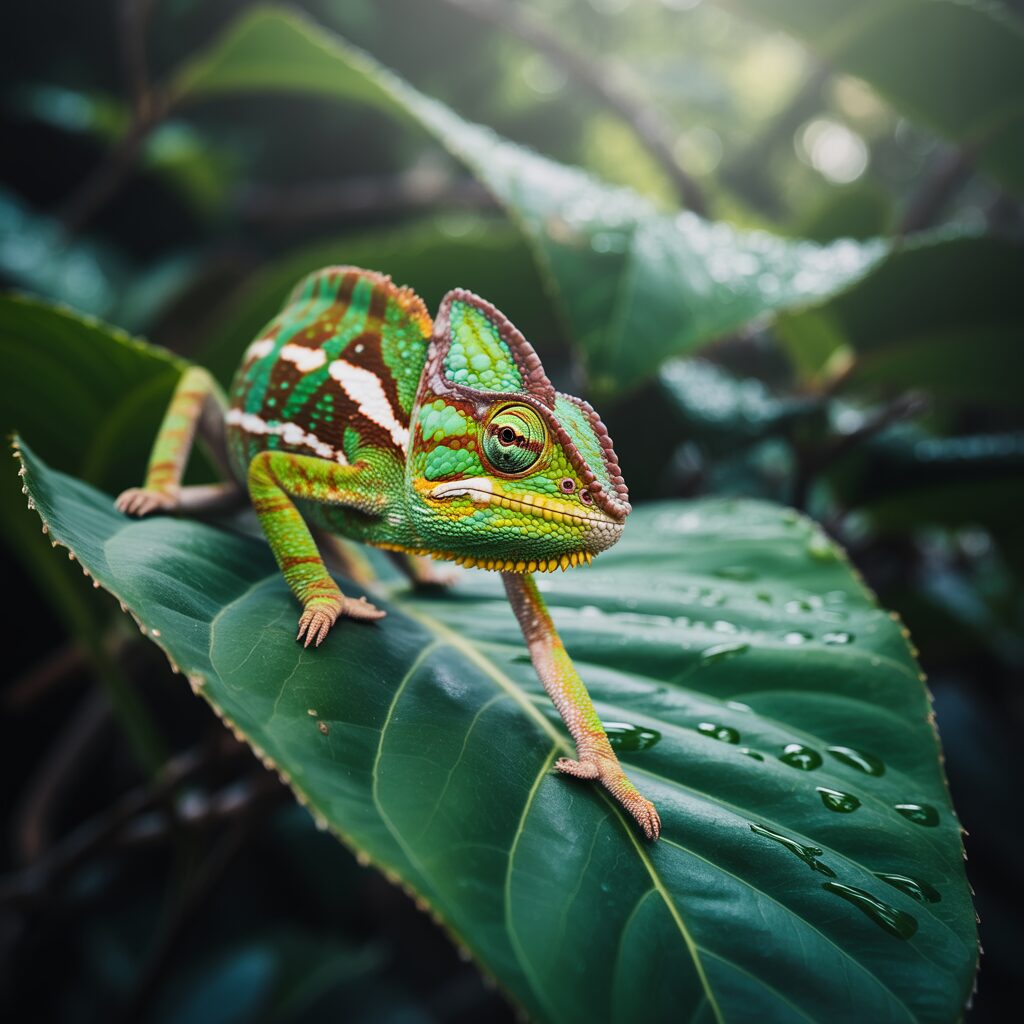
Caption: “Figure 1: Example of APA-style figure note for AI-generated media. Source: Honorlock“
Example 2: Midjourney image
Reference: Midjourney. (2026). Image generation model v6. [AI image generation tool].
Figure Note: Figure 2. Landscape rendered in photorealistic style. Generated using Midjourney v6 on March 3, 2026.
Example 3: Stable Diffusion image
Reference: Stability AI. (2025). Stable Diffusion XL. [AI image generation tool].
Figure Note: Figure 3. Abstract composition in blue tones. Generated using Stable Diffusion XL on December 12, 2025.
Important: As of September 2025, APA guidance includes version numbers and figure notes for AI-generated visuals. The reference lists the tool as a producer, and the figure note describes what the image depicts.
Citing AI-Generated Images — MLA Style
MLA takes a different approach. Rather than treating AI media as software output, MLA treats AI-generated visual works more like creative works with a human creative agent — the prompt author. MLA uses the AI prompt as the “title” and creates figure captions that document the tool and date.
The MLA format structure
MLA citation for AI-generated images follows this pattern:
Works Cited entry:
Your Name. Prompt (tool name, date). Title of image. URL (if applicable).
Figure caption (in the text):
AI-generated image created with [Tool Name] on [Date].
Concrete examples
Example 1: DALL-E image
Works Cited entry:
Smith, Jordan. “A chameleon walking on a green leaf, photorealistic.” DALL-E 3, 15 Jan. 2026.
Figure Caption: AI-generated image created with DALL-E 3 on January 15, 2026.
Example 2: Midjourney image
Works Cited entry:
Chen, Maya. “Golden retriever sleeping in an oil painting style, warm lighting.” Midjourney v6, 3 Mar. 2026.
Figure Caption: AI-generated image created with Midjourney v6 on March 3, 2026.
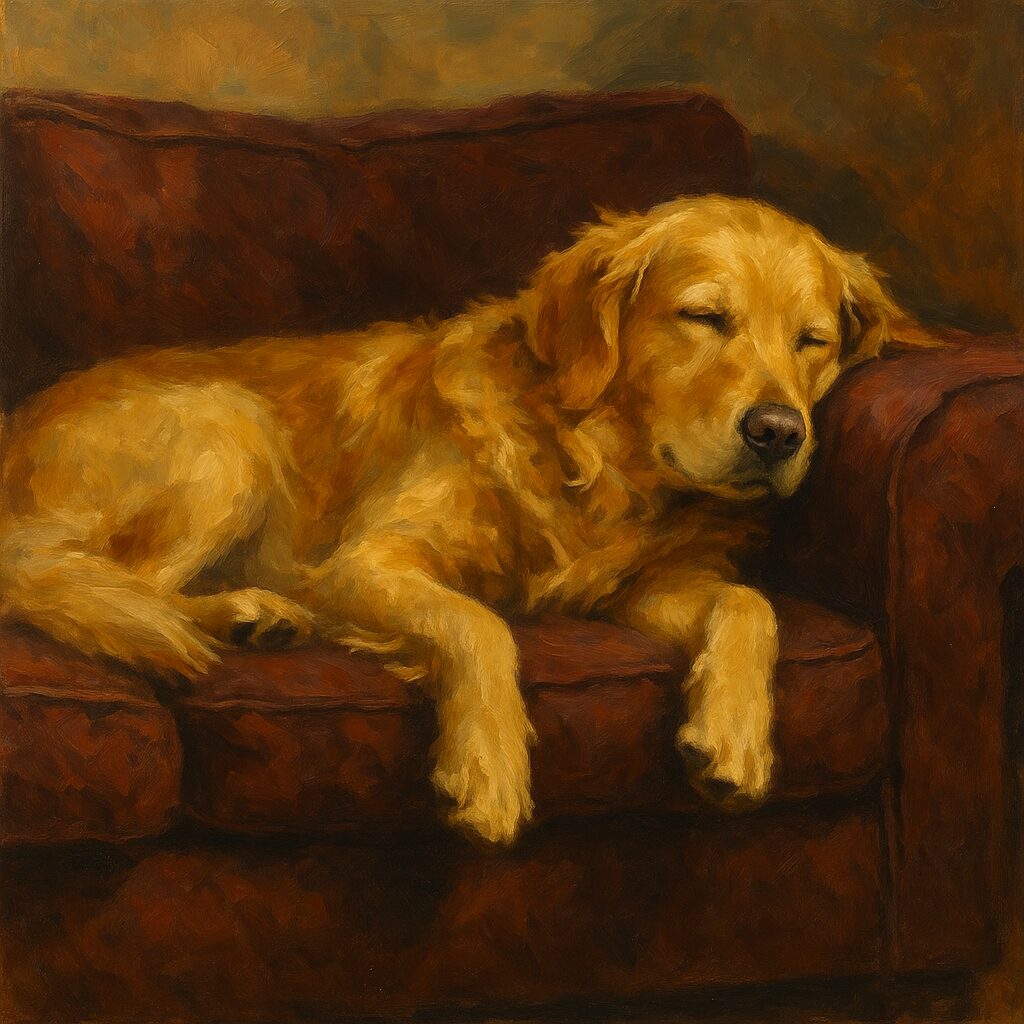
Caption: “Figure 2: Example of MLA-style caption with prompt attribution for AI-generated media. Source: Honorlock“
Example 3: Stable Diffusion image
Works Cited entry:
Williams, Sam. “Brown owl in a forest, high detail.” Stable Diffusion XL, 12 Dec. 2025.
Figure Caption: AI-generated image created with Stable Diffusion XL on December 12, 2025.
Key MLA nuance: The MLA Style Center treats the prompt as the creative title — the prompt itself becomes the “title of the work” in your Works Cited entry. This is distinct from APA’s software-style reference.
Citing AI-Generated Images — Chicago Style
Chicago Style takes the most conservative approach. It uses footnote-only formats for chat and text-based AI tools and figure captions for images, but it does not list AI as an author anywhere. Chicago treats AI media as a figure or a personal communication.
The Chicago format structure
Chicago citations for AI-generated images follow two patterns:
For images (figure caption, no bibliography entry):
Caption: [Description of image]. Generated using [Tool Name] on [Date].
For text/audio/video (footnote-only, no caption):
- [Name], “[Title of work],” generated using [Tool Name] on [Date].
Concrete examples
Example 1: AI-generated image
Figure Caption: Figure 1. Owl in a forest, AI-generated. Generated using DALL-E 3 on January 20, 2026.
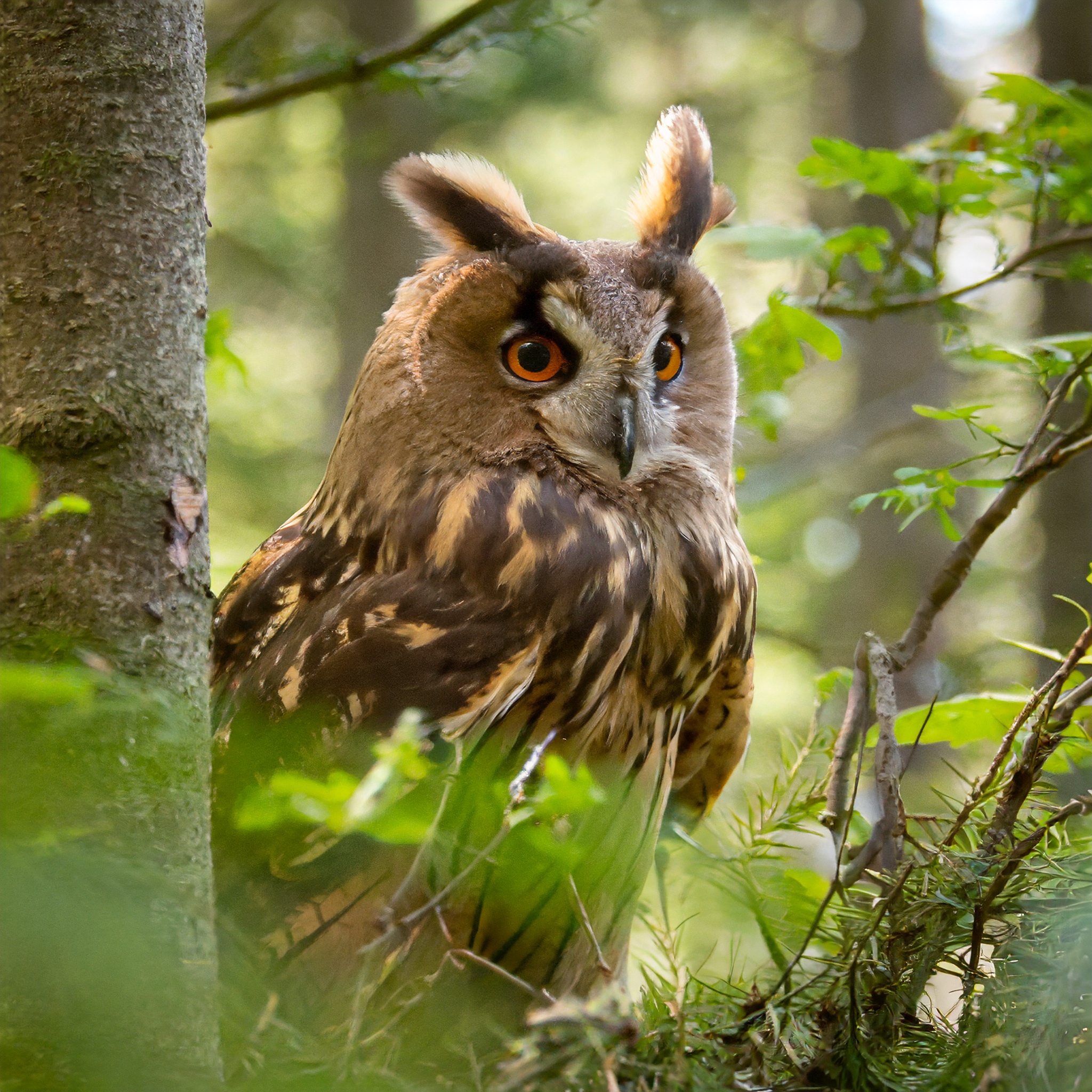
Caption: “Figure 3: Example of Chicago-style figure caption for AI-generated media. Source: Liu/CW Library Guide“
Example 2: AI-generated audio (footnote-only)
- Chen, Maya, “Sleeping golden retriever, oil painting style, warm lighting,” generated using Midjourney v6 on March 3, 2026.
Example 3: AI chat/text output
- Smith, Jordan, “Introduction to AI ethics,” generated using ChatGPT on December 5, 2025.
Critical Chicago distinction: Chicago Style guidelines clarify that images use figure captions with no bibliography entry, while text/audio/video use footnote-only formats with no caption. Most student guides conflate these formats — be careful not to add figure captions to audio citations or bibliography entries to image citations.
How Each Style Handles AI Audio and Video
All three styles treat audio and video differently from images. Here’s what actually matters when you’re citing AI-generated audio or video:
APA: Audio and video are cited as software output, similar to images. The reference entry lists the tool and version, and a figure note describes the media. The APA Style blog recommends treating audio/video the same way as images — as tool-produced content.
MLA: AI audio and video are cited with the prompt as the title (same as images). The figure caption documents the tool and date. MLA’s guidance extends the prompt-as-title approach to all media types.
Chicago: This is where Chicago diverges most significantly. Audio and video use footnote-only formats — the same format Chicago uses for chat/text. Unlike images (which get figure captions), audio and video get footnotes that read like personal communications or raw data entries. The Liu/CW library guide and Phillips Academy’s guide both confirm that Chicago does not add figure captions for audio or video.
Why this matters: If you’re using Chicago style and you cite a Sora video with a figure caption instead of a footnote, your citation is technically incorrect. Similarly, if you use APA and treat audio as a creative work with a prompt-as-title, that’s also outside the style’s guidance.
Deepfakes and Synthetic Media — Special Considerations
Deepfakes and synthetic media sit at the intersection of citation and academic integrity. When you use an AI-generated deepfake — whether for a media studies project, a communications presentation, or an experimental art assignment — the citation rules still apply, but your university’s policies may add additional requirements.
Citation-wise: Treat deepfakes as AI-generated media. Follow the same citation format you’d use for any AI-generated image, audio, or video — the style guide approach (APA figure note, MLA prompt-as-title, Chicago footnote) still applies.
Policy-wise: Many universities now require explicit acknowledgment when AI media could deceive readers. Durham University’s Policy 10 treats AI-generated images as requiring acknowledgment even when not misconduct. Vanderbilt lists detection red flags for multimedia that could confuse readers about authenticity.
The “authentication before action” principle: The Department of Homeland Security’s deepfake detection report (2019, updated 2026) recommends verifying media authenticity before using it in academic work. Several universities have adopted this principle as a compliance standard for students using AI-generated media.
When to cite differently: If a deepfake is used as evidence in a research paper about synthetic media, cite it as a sourced document with a clear note indicating its synthetic origin — not as your own creation, but as a subject of analysis.
What Universities Are Requiring Right Now
The landscape of university AI policies is shifting fast. By fall 2026, dozens of institutions have updated their academic integrity policies to explicitly address AI-generated media.
Durham University (Policy 10): The most comprehensive public document on AI media treats image generation as not normally misconduct but requiring acknowledgment. Policy 10 covers image or diagram generation, Policy 15 covers audio source provision, and both require students to declare AI use. This is widely cited as the model policy for multimedia AI acknowledgment.
Oxford University (Trinity Term 2026): Updated guidance now explicitly requires students to acknowledge AI-generated images, audio, and video in all submitted work — not just text. The update goes beyond the university’s existing text citation guidance and addresses the multimedia gap directly.
University of Buffalo (Fall 2026): New policy mandates formal AI declarations for all multimedia work, extending the university’s existing text AI declaration requirement to include visual and audio media.
The authentication trend: Universities are moving toward requiring an “authentication declaration” alongside submissions — a statement confirming that any multimedia used in the work is either AI-generated and properly cited, or human-created and verified.
C2PA content credentials: The ITU AI and Multimedia Authenticity Standards collaboration is establishing global standards for detecting deepfakes and verifying AI media provenance. In 2026-2027, academic policies will increasingly reference these standards. The shift is from “Is this real?” to “Where did this come from?”
Your action step: Check your university’s AI policy before citing AI media. The style guide (APA, MLA, or Chicago) may conflict with your institutional policy. When they conflict, university policy wins. Document both the style format and the university requirement.
Detection Tools for AI Media
If you’re using AI-generated media in academic work, knowing how to verify its authenticity matters — for your own confidence and for when professors evaluate multimedia submissions.
DeepFake-o-meter (free): Developed by the Buffalo Media Forensics Lab, this is the most accessible free detection tool for students and educators. It supports image, video, and audio detection across multiple generation models. Unlike paid tools, it doesn’t require institutional access. Accuracy varies across models and generation methods — it’s a starting point, not a final answer.
Copyleaks (enterprise): A commercial detection platform with enterprise-grade deepfake detection. More accurate than free tools, but requires institutional or paid access. Used by universities that need to evaluate large volumes of multimedia submissions.
Sensity AI (forensic): A forensic-grade detection tool used in professional and institutional contexts. Offers the highest accuracy across image, video, and audio, but is typically available only through institutional subscriptions or professional licenses.
Reality Defender: Another enterprise tool mentioned in detection research. Used for advanced forensic analysis of deepfakes.
JISC’s assessment: The UK’s JISC National Centre for AI conducted a comprehensive assessment of AI detection tools, including a traffic-light system analysis for text detection limitations and multimodal detection discussion. Their findings emphasize that no detection tool is infallible — accuracy varies significantly.
The accuracy caveat: No detection tool is perfect. Adaptive Security’s detection guide confirms that accuracy varies across models and generation methods. Never rely on a single tool for verification, especially in academic contexts where false positives could result in unjust accusations.
Student-facing checklist: TRSWarriors’ guide provides a practical checklist for students to spot AI images — check fingers, text, lighting, and background. It also includes deepfake video detection guidance for students.
Quick Comparison Table
| APA | MLA | Chicago | |
|---|---|---|---|
| AI as author? | No | No | No |
| What is cited? | Tool (software-style) | Prompt (as title) | Footnote or figure caption |
| Images | Reference + figure note | Prompt as title + figure caption | Figure caption only (no bibliography) |
| Audio | Reference + figure note | Prompt as title + figure caption | Footnote only (no caption) |
| Video | Reference + figure note | Prompt as title + figure caption | Footnote only (no caption) |
| Text/Chat | Reference + figure note | Prompt as title + figure caption | Footnote only |
| Version required? | Yes | No | No |
| Prompt included? | In figure note | As title | In footnote (no caption) |
Note: Chicago’s distinction between images (figure caption only) and audio/video (footnote only) is the most commonly missed nuance in student citation guides.
Related Guides
- How to Cite AI in Your Thesis: APA, MLA, Chicago Examples — The text citation guide this article complements. Covers chat citations, reference entries, and bibliography formatting for AI-generated text.
- University AI Policies Explained 2026: Reading Syllabuses and Staying Compliant — How to read your university’s AI policy, understand its scope, and stay compliant across different courses.
- AI Detection in Group Assignments: How to Stay Compliant (2026 Guide) — What happens when group work involves AI media. Who’s responsible for citation and acknowledgment.
- How AI Detectors Actually Work: Perplexity, Burstiness, and Stylometry — Understanding the technology behind AI detection so you can evaluate its reliability.
- Free vs Paid AI Detectors: Which Actually Works for Students in 2026? — A comparison of detection tools across pricing tiers, with practical recommendations for students.
Summary + Next Steps
Citing AI-generated media doesn’t have to be confusing — once you understand what each style actually requires, the process is straightforward. Here’s what to do next:
Step 1: Identify your citation style — APA, MLA, or Chicago. Your course syllabus or professor will tell you.
Step 2: Check your university’s AI policy — Even before choosing a citation format, confirm whether your institution requires an AI declaration. Durham, Oxford, and Buffalo all mandate multimedia acknowledgment.
Step 3: Use the right format — Follow the templates in this article for your specific media type (image, audio, or video). Don’t mix formats across styles.
Step 4: Document your prompt — Save the exact prompt you used, the tool name, and the generation date. This is the single most important piece of evidence for academic integrity verification.
Step 5: Verify before submitting — If your media was AI-generated, use a detection tool like DeepFake-o-meter or Copyleaks to confirm its origin. Never submit AI media you can’t verify.
The academic world is adapting to AI media faster than ever, and the tools available to detect and verify synthetic content are improving every month. Your best defense is transparency — cite your media honestly, document your process, and follow both the style guide and your university’s policy.
If you’d like personalized guidance on how to cite AI-generated media in your specific context, or need help verifying AI content in your submissions, contact our team for academic integrity consultation.
Can ChatGPT Run a Plagiarism Check? Here’s Why AI Chatbots Can’t Scan Sources
ChatGPT’s “plagiarism checker” doesn’t actually scan databases. Learn why AI chatbots can’t detect plagiarism and what tools you should use instead.
AI Detection for Internship & Co-Op Students 2026
What employers check for AI in applications, how universities handle co-op reports, and the documentation workflow that protects you from false positives.
AI Detection Browser Extensions: What Teachers Can Actually Install (2026 Guide)
If you’re a teacher looking for browser extensions to help verify student work, you’ve come to the right guide. In 2026, AI-generated content is everywhere — and Chrome extensions that scan student text directly inside Google Docs, Google Classroom, and other web-based learning platforms have become one of the most practical ways to catch AI […]